In this guide
- What Is Extraterritorial Jurisdiction?
- Is ETJ the Same as Being Inside the City?
- Why Does Texas Have ETJs?
- How Large Is a Texas ETJ?
- Why ETJ Matters for Permits
- ETJ and County Permitting
- ETJ and Building Permits
- ETJ and Site Plans
- ETJ and Zoning
- ETJ and Subdivision Development
- ETJ and Annexation
- Overlapping ETJs
- Common ETJ Permit Mistakes
- How to Determine if a Property Is in an ETJ
- Final Takeaway
- Frequently Asked Questions About Texas ETJ
When a property is located outside a city’s incorporated limits, it may still fall within that city’s Extraterritorial Jurisdiction (ETJ). This can create confusion for property owners, contractors, and developers who assume that being outside the city limits means the city has no connection to the project.
In Texas, ETJ generally refers to an area outside a municipality’s corporate boundaries that is subject to certain municipal authority under state law. The concept is especially important in areas experiencing rapid growth, where city boundaries, county areas, and developing communities can exist close to one another.
For construction and development projects, understanding ETJ can help determine which authorities need to be considered, what requirements may apply, and what information should be reviewed before preparing a permit package. An ETJ property is not simply treated as though it were inside the city. At the same time, it should not automatically be treated as though the city has no involvement. The best approach is to identify the property’s exact jurisdiction first and then determine which rules, approvals, and documentation apply to the proposed project.
What Is Extraterritorial Jurisdiction?
Extraterritorial Jurisdiction, commonly called ETJ, is an area outside a municipality’s corporate boundaries that falls within the municipality’s statutory ETJ. The purpose of ETJ is connected to municipal growth and development around city boundaries. As communities expand, construction and development can occur immediately outside incorporated city limits. Those projects can still affect roads, drainage, utilities, access, and surrounding development.
ETJ creates a defined area around certain municipalities where specific statutory requirements can apply. The important point is that ETJ does not mean the property is part of the city. Instead, the property remains outside the municipality’s corporate boundaries while being located within an area recognized as the city’s ETJ. This distinction becomes important when determining the correct permitting and development process.
Is ETJ the Same as Being Inside the City?
A property inside a city’s corporate limits is part of the municipality. An ETJ property is outside those corporate limits. This difference can affect how a project is reviewed and which requirements apply. For example, a property owner may see that a parcel is several miles outside a city’s main developed area and assume that the city has no connection to the property. However, the property could still fall within the city’s ETJ. The opposite assumption can also create problems. Being located in an ETJ does not automatically mean that every city requirement that applies inside the municipal limits applies in exactly the same way to the property. The correct question is:
What jurisdiction and regulatory requirements apply to this specific property?
That question should be answered before finalizing the project design.
Why Does Texas Have ETJs?
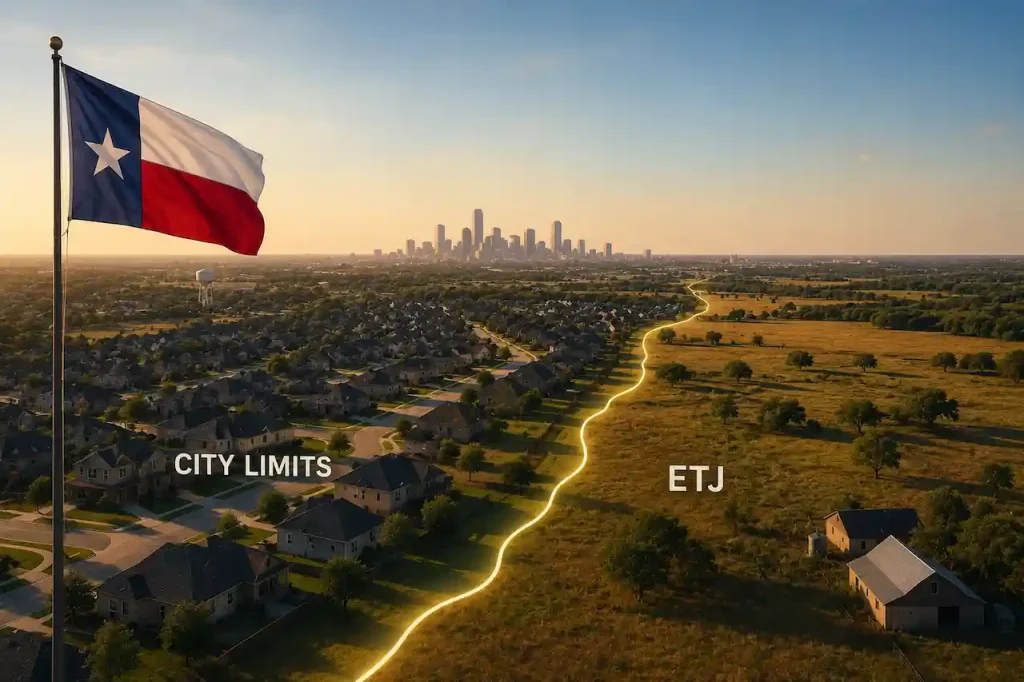
ETJs are intended to provide a framework for development around municipalities and help address growth occurring near city boundaries. Development outside city limits can still influence surrounding communities. New buildings, subdivisions, roads, drainage systems, utilities, and other improvements can affect areas both inside and outside the municipality. For rapidly growing Texas communities, this can make jurisdictional planning particularly important. ETJ helps create a defined geographic relationship between a municipality and nearby unincorporated areas.
However, ETJ should not be viewed as simply an extension of city limits. It is a separate jurisdictional concept with its own legal framework. For property owners, the practical lesson is that being outside city limits does not automatically eliminate the need to investigate municipal ETJ status.
How Large Is a Texas ETJ?
There is no single ETJ distance that applies to every Texas municipality. The general statutory framework uses municipal population as one factor in determining the size of an ETJ. Depending on the municipality, the general range can extend from a smaller area around a smaller city to a larger area around a more populated municipality.
However, special circumstances and statutory provisions can affect particular ETJ boundaries. Because of this, property owners should not simply estimate ETJ status by measuring a distance from the center of a city. A property may also be affected by boundary changes, nearby municipalities, or other jurisdictional considerations. The safest approach is to confirm the actual municipal boundary and determine whether the property falls within the applicable ETJ.
Why ETJ Matters for Permits
ETJ status can matter because the property’s location helps determine which authorities and requirements need to be considered. Depending on the project, the review may involve matters such as:
- Building permits
- Site plans
- Subdivision requirements
- Development regulations
- Road access
- Drainage
- Utilities
- Flood-related requirements
- Fire access
- County requirements
- Municipal ETJ-related requirements
The exact requirements depend on the property and proposed development. This is why jurisdiction and permit requirements should be among the first items checked during project planning. If the project team begins preparing drawings based on the wrong jurisdiction, the plans may need to be changed later.
ETJ and County Permitting
One common misunderstanding is that an ETJ property is automatically permitted entirely through the municipality. That is not necessarily the case. ETJ territory is outside municipal corporate limits, which means county authority can remain relevant depending on the property and project. A property may be outside city limits, located within a city’s ETJ, and still be subject to county requirements. This can make the permitting process more complicated than a straightforward project located entirely inside a municipality.
Before preparing the final permit package, property owners should identify all authorities that may have a role in the project. The goal is not to assume that one agency controls everything. The goal is to understand which requirements apply to the specific property.
ETJ and Building Permits
Building permit requirements can vary depending on where a property is located. A project inside city limits may follow a municipal permitting process, while a project in an unincorporated area may follow a different process. An ETJ property requires additional jurisdictional consideration because it sits outside the municipal limits but within the municipality’s ETJ. Before preparing final drawings, determine:
- Who receives the permit application?
- Which building requirements apply?
- Who reviews the site plan?
- Are additional approvals required?
- What inspections are necessary?
- Are county requirements involved?
- Are municipal requirements relevant to the ETJ?
Answering these questions early can help prevent unnecessary revisions.
ETJ and Site Plans
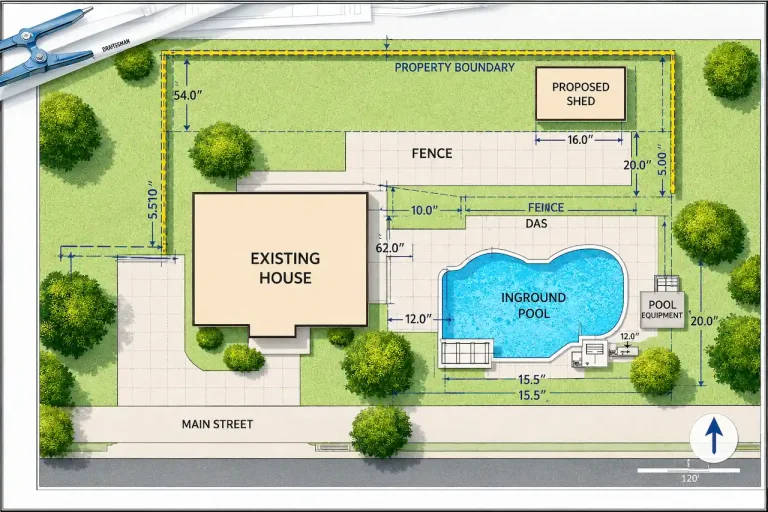
A site plan is an important part of understanding how a proposed project fits on a property. Depending on the project, a site plan may show:
- Property boundaries
- Existing structures
- Proposed structures
- Building dimensions
- Setbacks
- Driveways
- Parking
- Easements
- Utilities
- Drainage
- Access
- Other improvements
For an ETJ property, accurate jurisdictional information is particularly important. The site plan should be prepared based on the actual property boundaries and requirements applicable to the project. If the wrong jurisdiction is assumed, the proposed development could be designed around incorrect setbacks, access requirements, site standards, or submission expectations.
ETJ and Zoning
Zoning is another area where property owners need to be careful. A common assumption is that an ETJ property automatically follows the same zoning requirements as a property located inside city limits. That should not be assumed. ETJ territory is outside the municipality’s corporate boundaries, and the regulatory framework can differ from the rules applied inside the city. The applicable requirements depend on the property, project, local regulations, agreements, and other circumstances. This is particularly important for projects involving:
- Commercial development
- New buildings
- Subdivisions
- Large additions
- Accessory structures
- Land-use changes
- Major property improvements
Before preparing the final site plan, the project team should verify which requirements actually apply.
ETJ and Subdivision Development
ETJ becomes especially important when a property is being subdivided. A subdivision involves more than placing a building on an existing lot. It can involve the creation of new lots, roads, drainage systems, utilities, easements, access, and infrastructure. A project involving subdivision can therefore require more extensive review than a simple building permit. If the property is within an ETJ, the project team should determine the applicable municipal, county, and subdivision requirements before beginning detailed design work. This can help avoid preparing a subdivision layout that does not meet the requirements of the reviewing authority.
ETJ and Annexation
ETJ and annexation are related concepts, but they are not the same thing. Annexation involves territory becoming part of a municipality’s corporate boundaries. An ETJ property remains outside the city’s corporate limits unless its legal status changes through an applicable process.
Therefore, a property being located in an ETJ does not automatically mean that it has been annexed or that it will automatically become part of the city. For property owners, the distinction matters because city-limit status and ETJ status should be evaluated separately. If a project’s future development depends on jurisdictional status, the current status should be confirmed rather than assumed.
Overlapping ETJs
Jurisdictional questions can become more complicated when municipalities are located close to each other. In developing regions, cities may have boundaries and ETJs located near one another. This can make it difficult to determine the applicable jurisdiction by simply looking at a general map.
A property owner should not rely only on its distance from a city or its mailing address. The actual property location and applicable jurisdictional boundaries should be reviewed. This is especially important for contractors and developers who work across multiple Texas cities. A process that works for one property may not automatically work for another property a few miles away.
Common ETJ Permit Mistakes
Assuming ETJ Means City Limits
An ETJ property is outside the city’s corporate boundaries. It should not automatically be treated as though it is located inside the city.
Assuming the City Has No Role
Being outside city limits does not mean ETJ status can be ignored. The applicable municipal and county requirements should be reviewed.
Looking Only at the Mailing Address
A mailing address may not clearly establish the property’s governmental jurisdiction. The actual property location should be confirmed.
Using the Wrong Permit Process
Starting with the wrong permitting authority can result in delays, additional documentation, and unnecessary plan revisions.
Ignoring County Requirements
Because ETJ territory is outside municipal limits, county requirements can remain relevant depending on the property and project.
Assuming City Zoning Automatically Applies
ETJ property should not automatically be treated the same as property inside city limits. The applicable development requirements should be confirmed.
Preparing Plans Before Confirming Jurisdiction
Designing the project before establishing the correct jurisdiction can result in drawings that do not match the applicable requirements.
Treating ETJ Boundaries as Simple Circles
ETJ boundaries can involve population-based rules, statutory provisions, boundary changes, and nearby jurisdictions. A simple distance estimate may not provide an accurate answer.
How to Determine if a Property Is in an ETJ
A jurisdiction review should happen before finalizing the project design.
Step 1: Confirm the Property Location
Start with the exact property location, legal description, parcel information, and available property documents.
Step 2: Identify the Municipal Boundary
Determine whether the property is inside or outside the corporate limits of a nearby municipality.
Step 3: Check ETJ Status
If the property is outside city limits, determine whether it falls within the municipality’s ETJ.
Step 4: Identify Other Authorities
Determine whether the county or another applicable authority has jurisdiction over the property or proposed development.
Step 5: Identify the Project Type
Determine whether the project is a residential improvement, commercial development, subdivision, addition, accessory structure, or another type of project.
Step 6: Review Site Conditions
Evaluate property boundaries, easements, access, drainage, utilities, existing structures, and other conditions that may affect the proposed development.
Step 7: Prepare the Site Plan
Once the applicable requirements are identified, prepare the site plan around the actual property and jurisdiction.
Step 8: Complete a Pre-Submission Review
Before submitting the project, review the complete permit package against the applicable requirements and make sure all supporting documents are consistent. A professional site plan review can also help identify potential issues before the permit package is submitted.
Final Takeaway
Extraterritorial Jurisdiction is an important concept for Texas property owners, contractors, and developers. A property can be outside a city’s corporate limits while still being located within that city’s ETJ. This can affect how the project should be evaluated and which authorities or requirements need to be considered. The most important step is to confirm the property’s exact jurisdiction before preparing the final plans.
Do not rely only on the mailing address, approximate distance from the city, or assumptions based on nearby properties. Instead, identify the municipal boundary, determine whether the property falls within an ETJ, identify county and other applicable authorities, and then review the requirements for the specific project. Taking this jurisdiction-first approach can help reduce permitting confusion, avoid unnecessary revisions, and create a more predictable path toward project approval.
Frequently Asked Questions About Texas ETJ
1. What does ETJ mean in Texas?
ETJ stands for Extraterritorial Jurisdiction. It generally refers to an area outside a municipality’s corporate boundaries that falls within the municipality’s statutory ETJ.
2. Is ETJ the same as being inside city limits?
No. ETJ territory is outside the municipality’s corporate boundaries. It should not automatically be treated as though it were part of the city.
3. How far does a Texas city’s ETJ extend?
The general ETJ distance can vary based on municipal population and applicable statutory provisions. Special circumstances can also affect particular ETJ boundaries, so the actual property should be checked rather than relying on a general distance.
4. Does ETJ affect building permits?
It can. ETJ status may affect which authorities and requirements need to be considered for a project. The exact permitting process depends on the property and proposed development.
5. Does a property in ETJ have to follow city zoning?
Not automatically. ETJ property is outside the city’s corporate limits, and the applicable regulatory framework can differ. The actual requirements should be confirmed for the specific property and project.
6. Can a property be in both a county and a city’s ETJ?
Yes. Because ETJ territory is outside municipal corporate limits, county authority can remain relevant while the property is also located within a municipality’s ETJ.
7. Does ETJ mean the property will eventually be annexed?
No. ETJ status and annexation are different concepts. A property being located in an ETJ does not by itself mean that it will automatically become part of the city.
8. Why should I check ETJ status before preparing a site plan?
Checking ETJ status early helps identify the applicable jurisdiction, permitting process, site requirements, and supporting documentation before the final design is completed.
9. Can ETJs overlap?
Jurisdictional boundaries can become complicated when municipalities are located close together. The applicable boundaries should be confirmed for the specific property rather than estimated from distance alone.
10. How can I determine whether my property is in an ETJ?
Start with the property’s exact location and legal information, then determine the applicable municipal boundaries and ETJ status. County and other potentially relevant authorities should also be identified before the permit process begins.
Need permit drawings? See our Texas site plan services and full permit drawing sets.

Engineer Wasim
I have been preparing permit drawings since 2015, across residential, commercial, structural, site plan and engineering coordination projects. Site Plans TX focuses that experience on Texas permit rules and local review criteria.